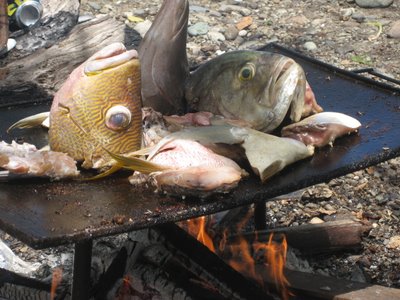
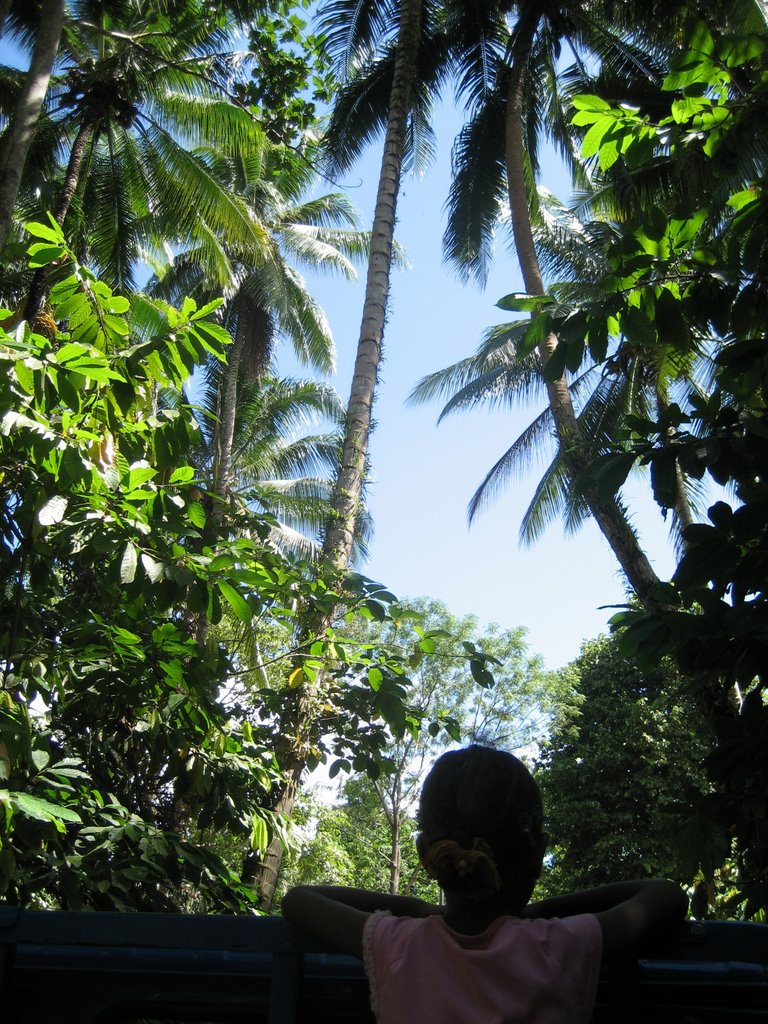
 Saturday was the Economics Department picnic. At first glance, not an occasion to inspire excitement and anticipation, but in actual fact, a typically hilarious and entertaining Solomon Island staple. I’d already attended the Trade department picnic a few weeks back courtesy of Julia, a member of my ODI wantak, and on that day I’d eventually arrived back at home drunk on red wine and mind scrambled by kava (the local mildly hallucinogenic root drink most popular in Vanuatu). This day was no different. A big open back truck was acquired, negotiations on food quantities were finalised after discussions all week, families were assembled at a typically early hour of the morning (including the full quota of tiny pikininis) and with everyone in the back of the truck we headed down the coast to the beach. On arrival, there was no pissing about sitting enjoying the view or swimming in the irresistible waters (apart from the free-riding foreigner who simply couldn’t resist), but it was all action stations from the word go. The fish were descaled and gutted, the fire was lit, chicken, sausages, beef and fish were cooked on tables over the fire (see photo) and meanwhile the women whipped up temporary woven dishes from palm leaves. Needless to stay, all this was accompanied by consumption of Solbrew, wine and Fiji rum (56% proof no less).
 The rest of the day flowed from the feast that followed, with drinking and storim till the late afternoon. After a suitable number of drinks, I also tried my hand at fish hunting for the first time. This, however, was not quite the image I had in mind. Instead of a high-tech state-of-the-art shining harpoon gun, the locals go armed with a rusty metre-long sharpened metal rod, and a thick piece of elastic. After watching my next-door neighbour Max successfully shoot small reef fish from amazing distances, I spent about an hour myself having a go. I was a natural, it has to be said. I rapidly went from being “not even bloody close” to “not even close”, but was so fun that I’m inspired to forego technology-assisted fish shooting, and work on this more humble practice. Perhaps night-time hunting is the way, as I am told that fish sleep at night and shooting then is a walk in the park, not dissimilar to pushing cows over when they’re sleeping standing up. More updates on my attempts to find and shoot Nemo at a later date.
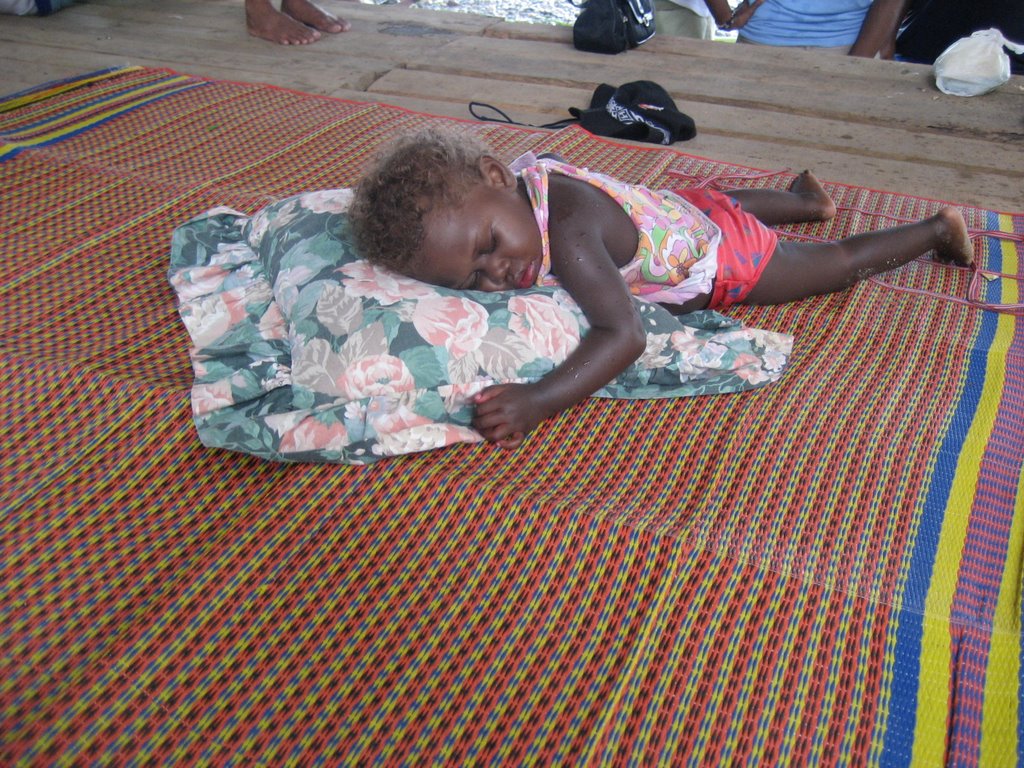
By the time the rain came down, as it’s started doing with worrying frequency now that the rainy season has arrived, everyone was too merry to care, while others had simply fallen asleep (including wee Melissa, see photo). Later still, drunk and happily jabbering away, everyone clambered back into the trucks to be delivered back to their various houses. My own arrival was somewhat less smooth, as within 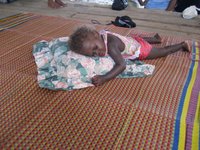 seconds of getting into my house I’d somehow managed to lock myself out (I place the blame firmly on the temporal infestation of fleas) and had to spend the next 2 hours on a classic wild goose chase, driving round Honiara trying to find the mystery man with a spare key. But that’s another stori.
For those of you not entirely sure where the Solomons are, and who keep intending to get out their atlas but never get round to it, I have here a map for your convenience, courtesy of an Italian tai-chi instructor. That is all.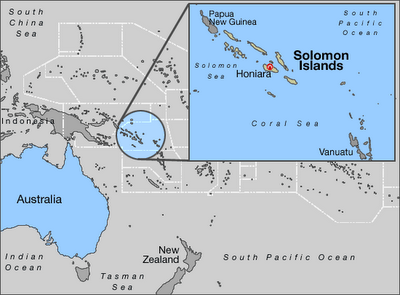
They say that first impressions are the strongest. When it comes to societies, rather than individuals, this seems to me particularly true, for only in the first week or two of being in a place do shared characteristics and national traits really thrust themselves upon you. Before long, as you get to know more and more people properly, these commonalities quickly begin to unravel and the complex mix of individuals and groups that make up society comes to dominate. Already now, those first impressions of people here that were buzzing round my mind so strongly in the first couple of weeks have begun to melt away. Nonetheless:
First and foremost, any visitor to the Solomons cannot but be struck by their reserved sweet natured-ness and infallible good humour. Wherever you are, whether in some dirty shack selling cheap “likker” or in the offices of the Central Bank, there are invariably a couple of people within earshot enthusiastically laughing away. Do types of laughs vary between nationalities? It appears so, for in the Solomons there is a distinctive high-pitched giggle that you hear everywhere, which in moments of real hilarity (i.e. the smallest amusement) heightens to a shriek of absolute glee. Extremely contagious, though also sometimes alarming as opening the mouth to laugh reveals the “betal nut” chewers razor sharp dagger-like teeth, with the blood-red juice dripping from them.
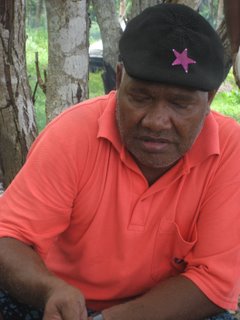 The next thing you notice is how incredibly shy people are here. This is seriously disconcerting at first. You approach the counter of a shop, try to catch the salesperson’s eye to ask for something, and their reaction is to give a sweet slightly-nervous giggle, and to stare at their feet. Even in work, asking someone about some issue or another, I found at first the answer was often addressed to their feet or at the wall in the opposite direction to where I was. Soon though, you get used to it, and feeling like an over-dominant Western brute for such an aggressive act as looking them in the eye you end up yourself looking at your feet when speaking to someone you don’t know. There is something very natural and bird-like about this interaction, a dance in which eyes are raised occasionally, are less occasionally met, and momentary half-smiles flash across lips. Still, it is a relief that many people involved in business or politics do not have this way about them, and that when you get to know the shy ones, eye-contact becomes normal.
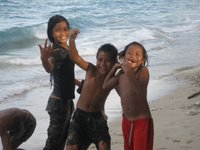 There is a funny contradiction between this gentle nature, and the appearance of many of the younger men here. When I first walked the bustling street (singular) of Honiara, head still somewhere over the Bay of Bengal, I thought I had stumbled straight into a gang ghetto. The men look tough as shit, their feet flattened wide and toes spread-eagled from walking barefoot, clothes dirty and torn, many are massive fellas and covered in home-made skin-carvings or tattoos. But…then you notice them walking along holding hands, giggling together like schoolgirls, and eager to exchange a friendly smile with the white zombie. I have not once witnessed a single aggressive act in the four weeks I’ve been here, let alone a violent act. (Actually, I lie: one exception was an outraged 8 year-old whose older brother made the mistake of seriously pissing him off – here another remarkable feature of Solomonanders became clear which is their ability to throw stones very hard and with remarkable accuracy from a very young age: during the riots in April apparently you would often see the Aussie peace-keeping soldiers with big black eyes after getting clomped by a just such a missile). In light of this, I find it startling that as a people they could be capable of such brutal and meaningless blood-shed as occurred during “the tensions” (which started in 2000, more on this at a later date). The sad explanation, as always, is they were the actions of a relatively small minority.
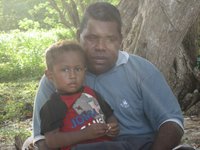 Other characteristics? They are extremely diverse in their appearance, with clear differences depending on the island from which they happen to originate. Their eyesight is so good it makes me feel I need glasses. They are as a rule very devout Christians, though the tiny population includes more denominations than I am able to keep count of. Perhaps related to the previous, they sing beautifully. Those that can swim, swim like fish. Remarkably, many others (at least in Honiara) cannot. People go to bed early and wake up at dawn (something to which I aspire, but am yet to master). On that note, “me go slip nao”.
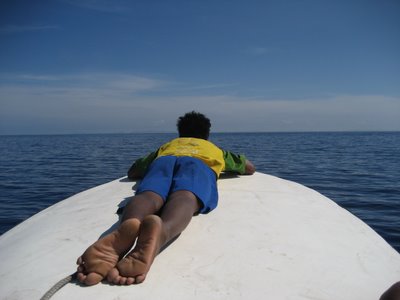 Ever since last Sunday, when I got my first taste of the island world beyond Guadalcanal and Honiara, I have been itching to write about the day’s ventures. Unfortunately, two stumbling blocks appeared which waylaid me somewhat. First, at the beginning of the week I was absorbed in the painting of my house, for the third time in as many years and in as many continents, and a chore of which I am now totally sick. Secondly, and even more all-absorbingly, in the middle of the week I was abruptly struck down by a bout of malaria, thus joining an exclusive club whose members include Ellie, Maro, the entire population of the Solomons and a few hundred million Africans.
I am now fine, I hasten to add. When diagnosed correctly and early, both of which are fairly routine in most developing countries, treatment for malaria is effective in 99.9% of cases (though don’t quote this in any medical journals, any doctors out there). Within 24 hours of the first symptom I was driven by Luke to a local clinic, had a tiny drop of blood taken from my fingertip for testing, and 15 minutes and a quick jab in the bum later and I was leaving again, a plastic bag of pills stuffed in my pocket. Now, just two days later, the worst symptoms have subsided, helped no doubt by the platefuls of fish and bags of fruit delivered to my door by friends and neighbours. Of course, this is not to say that malaria is not a horrible disease, and very dangerous if untreated. I don’t think I have ever felt as terrible as I did in the grip of malaria’s evening visitations. A roaring fever, alternating with arctic chills, and an indescribable headache sending shockwaves tearing through each brain cell on the slightest movement. But the point is that it is eminently treatable.
And yet… and yet… the last time I looked malaria was the disease responsible for the most global deaths each year (though quite possibly AIDS has now achieved this dubious honour). And that is the true tragedy of malaria. Is there any more potent symbol of the extent to which money rules this world, and the injustice this creates? The drugs exist, diagnosis is simple, and yet millions die. I remember when in Malawi meeting a young British medical student on a few months secondment, who told me how all patients diagnosed with malaria, even children, could only be given paracetamol and then sent on their way. Not the most fulfilling experience of being a doctor I imagine, but a pretty accurate insight into how the health system works in many developing countries. Though logistically and financially, production and distribution of sufficient drugs to save huge numbers of lives would be relatively simple, the sea-change required by profit-oriented drugs companies, or alternatively the political will to enforce such an action, means the current injustice is likely to remain for many years to come.
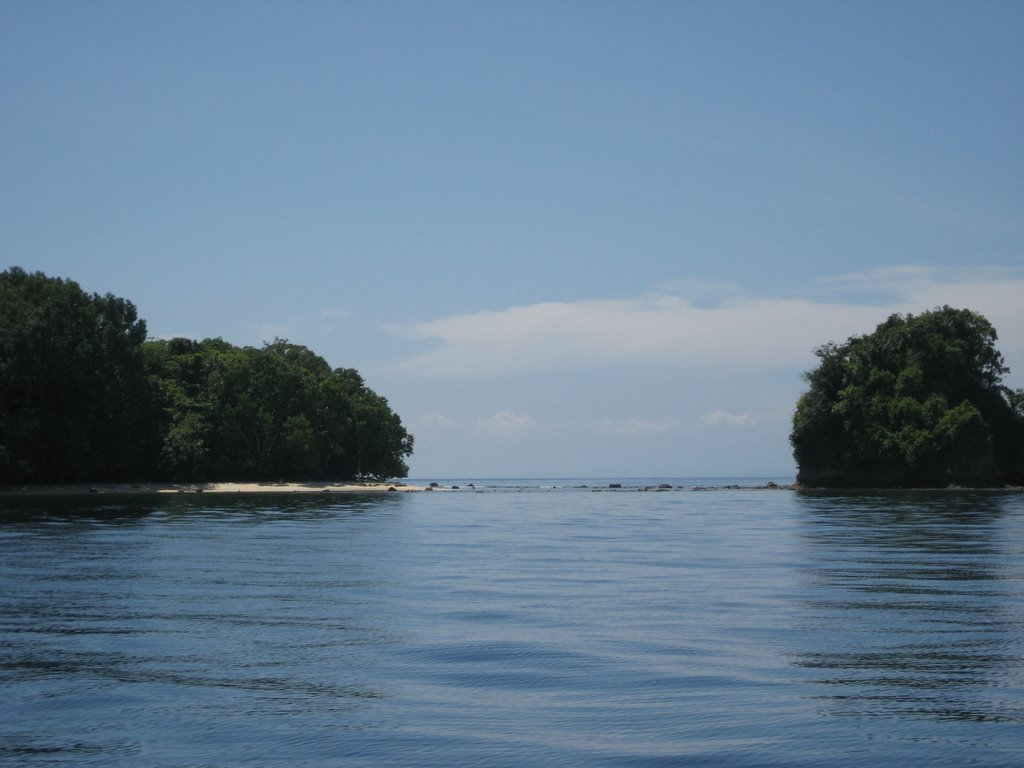
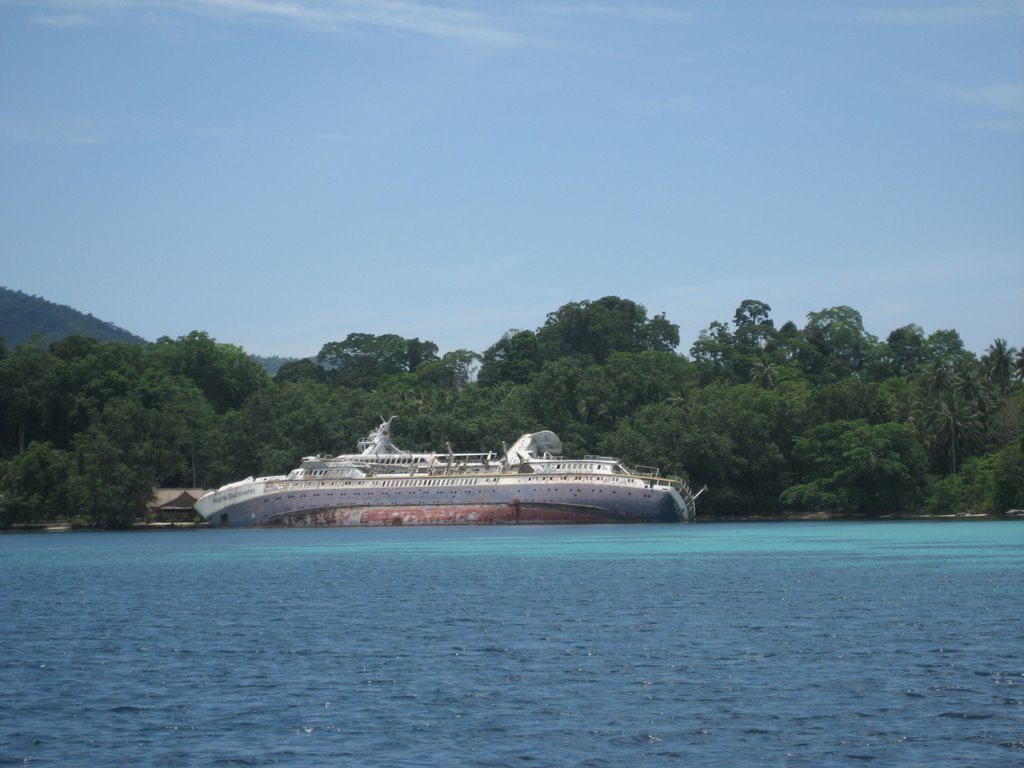
 But to end on a less bleak note, the archipelago of Nggela visited on Sunday had me chuckling to myself in disbelief. They are one of the only islands, along with the volcanic Savo, that are visible from Honiara, and are just a one hour (50 horsepower) skit across Iron Bottom Sound, so named because of the number of World War II planes and ships sunk in its waters. But
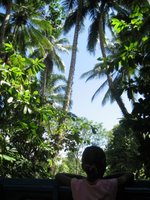
 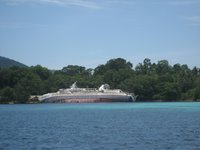 they are altogether a world apart. The provincial capital Tulagi is smaller than the tiniest British village, with an atmosphere so peaceful and sleepy you could imagine living a lifetime there and it would feel like a week. Spent the day scooting round the various tiny islands with a friend and colleague Donald (whose boat it was) and a couple of his cousins including young Henry (pictured top - everyone here has
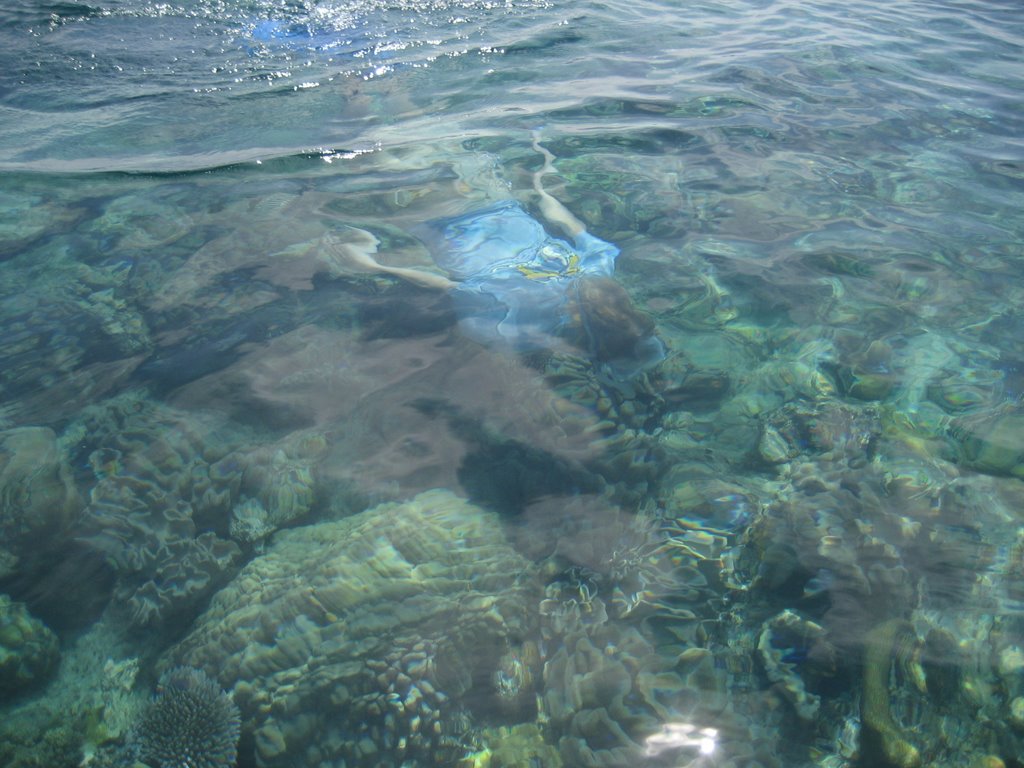
 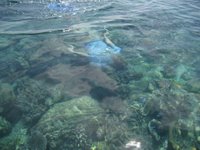 good old-fashioned British names). I could try to eulogise at length on the jaw-dropping and tantalising crystal clear waters, the white sandy beaches backed by thick green jungle, and the reefs and underwater canyons to explore. But I won’t. Neither words nor photos do it justice. And the locals say that this is nothing, that for natural beauty in the Solomons, “the West is the Best”. Crimbo on the beach p’raps.
 Saturday was the Economics Department picnic. At first glance, not an occasion to inspire excitement and anticipation, but in actual fact, a typically hilarious and entertaining Solomon Island staple. I’d already attended the Trade department picnic a few weeks back courtesy of Julia, a member of my ODI wantak, and on that day I’d eventually arrived back at home drunk on red wine and mind scrambled by kava (the local mildly hallucinogenic root drink most popular in Vanuatu). This day was no different. A big open back truck was acquired, negotiations on food quantities were finalised after discussions all week, families were assembled at a typically early hour of the morning (including the full quota of tiny pikininis) and with everyone in the back of the truck we headed down the coast to the beach. On arrival, there was no pissing about sitting enjoying the view or swimming in the irresistible waters (apart from the free-riding foreigner who simply couldn’t resist), but it was all action stations from the word go. The fish were descaled and gutted, the fire was lit, chicken, sausages, beef and fish were cooked on tables over the fire (see photo) and meanwhile the women whipped up temporary woven dishes from palm leaves. Needless to stay, all this was accompanied by consumption of Solbrew, wine and Fiji rum (56% proof no less).
 The rest of the day flowed from the feast that followed, with drinking and storim till the late afternoon. After a suitable number of drinks, I also tried my hand at fish hunting for the first time. This, however, was not quite the image I had in mind. Instead of a high-tech state-of-the-art shining harpoon gun, the locals go armed with a rusty metre-long sharpened metal rod, and a thick piece of elastic. After watching my next-door neighbour Max successfully shoot small reef fish from amazing distances, I spent about an hour myself having a go. I was a natural, it has to be said. I rapidly went from being “not even bloody close” to “not even close”, but was so fun that I’m inspired to forego technology-assisted fish shooting, and work on this more humble practice. Perhaps night-time hunting is the way, as I am told that fish sleep at night and shooting then is a walk in the park, not dissimilar to pushing cows over when they’re sleeping standing up. More updates on my attempts to find and shoot Nemo at a later date.
 seconds of getting into my house I’d somehow managed to lock myself out (I place the blame firmly on the temporal infestation of fleas) and had to spend the next 2 hours on a classic wild goose chase, driving round Honiara trying to find the mystery man with a spare key. But that’s another stori.



 Ever since last Sunday, when I got my first taste of the island world beyond Guadalcanal and Honiara, I have been itching to write about the day’s ventures. Unfortunately, two stumbling blocks appeared which waylaid me somewhat. First, at the beginning of the week I was absorbed in the painting of my house, for the third time in as many years and in as many continents, and a chore of which I am now totally sick. Secondly, and even more all-absorbingly, in the middle of the week I was abruptly struck down by a bout of malaria, thus joining an exclusive club whose members include Ellie, Maro, the entire population of the Solomons and a few hundred million Africans.